TL;DR
To choose a pet urn, focus on three things: how well its look reflects your pet, whether the personalization captures a genuine memory, and whether you feel comfortable with the spot where it will be placed. First settle on size and location, then compare materials, colors, and inscriptions. If you're not ready to decide right away, you can temporarily keep the ashes in a familiar container and choose the urn when the time feels right.
How do you find pet urn ideas that fit your companion?
Start with three simple questions: which color immediately makes you think of him or her? Do you want to include the name, a portrait, or a nickname only your family knows? Do you picture this keepsake somewhere always visible, or would you rather keep it discreetly inside a cabinet?
The answers are often more helpful than whatever happens to be trendy. A lively pet doesn't need colorful, elaborate decoration, just as a calm, quiet presence doesn't have to be paired with a minimalist container. You can draw inspiration from things your pet used, colors they loved, or a small detail from their collar, without trying to gather every memory into a single object. One clear, familiar mark is already enough to set it apart from everything else.
Settle size, placement, and how you'll use it first
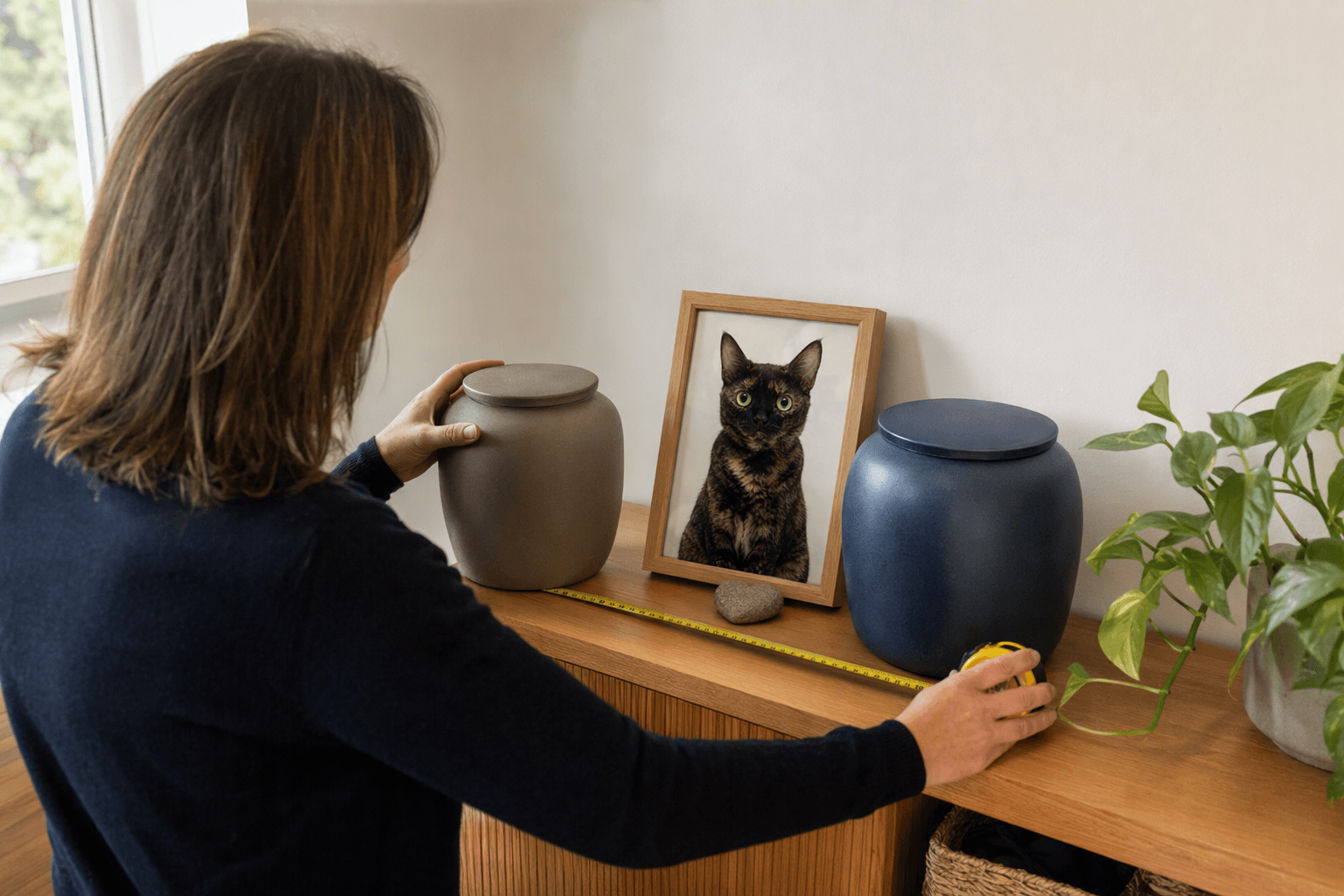
Before choosing how the urn looks, figure out what it needs to hold, how much space you have, and whether you'll be moving it often. Measure the width and height of the shelf, cabinet, or memorial corner, leaving enough room to open it, clean it, and pick it up. If you think you'll carry it between homes, also factor in weight, shape, and how steadily it sits.
This quick list can help you narrow things down:
- A fixed spot: go for a design that fits the room's colors and has a stable base.
- Occasional moves: choose a shape that's easy to grip, without decorations that could come loose.
- Inside a cabinet: check the interior depth first and how visible it will be once the door is open.
- If you'd rather not display it yet: a discreet container works, with a card bearing your pet's name and date kept inside or outside.
This step doesn't limit the memory, it simply makes it easier to care for over time.
Which details are worth personalizing?
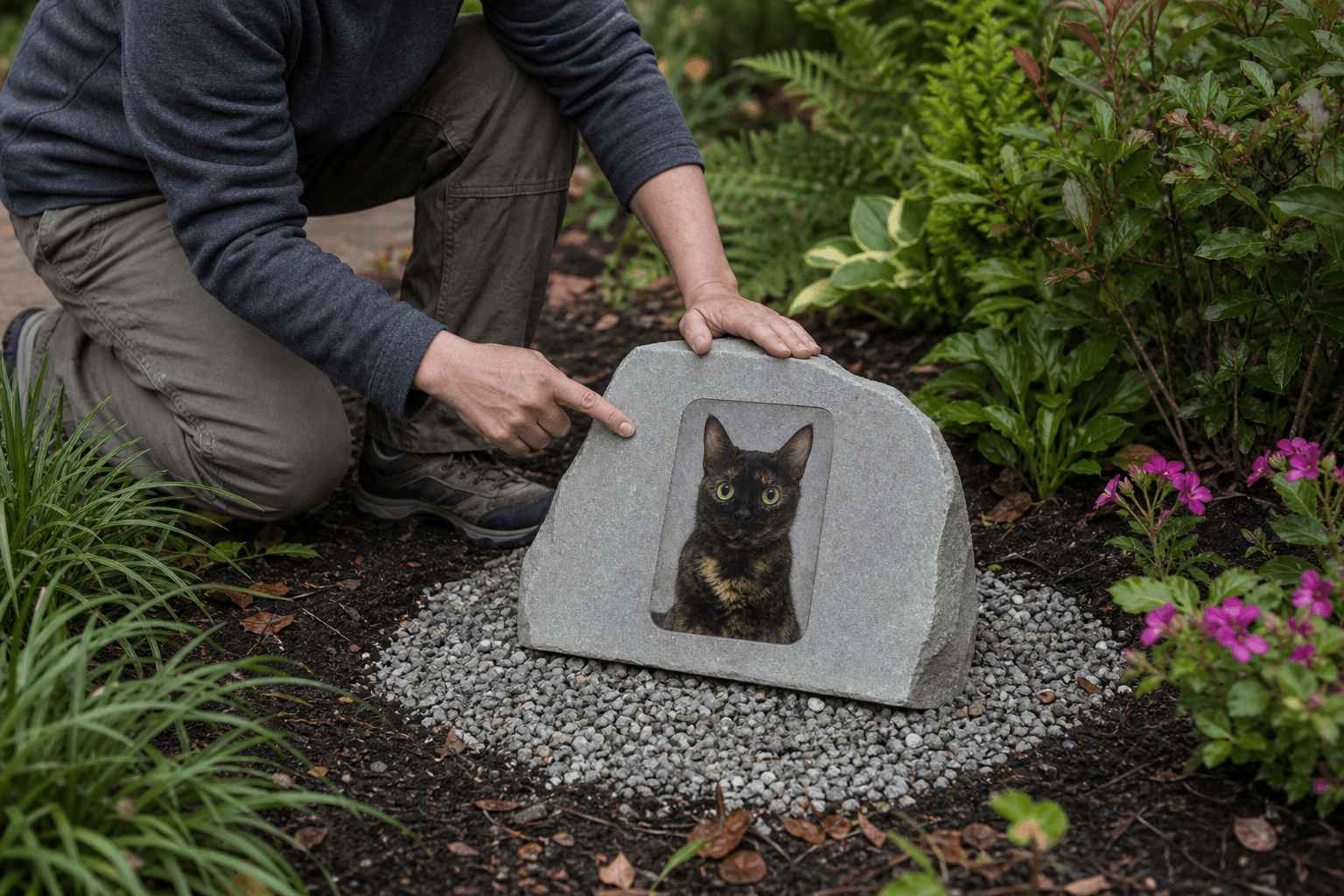
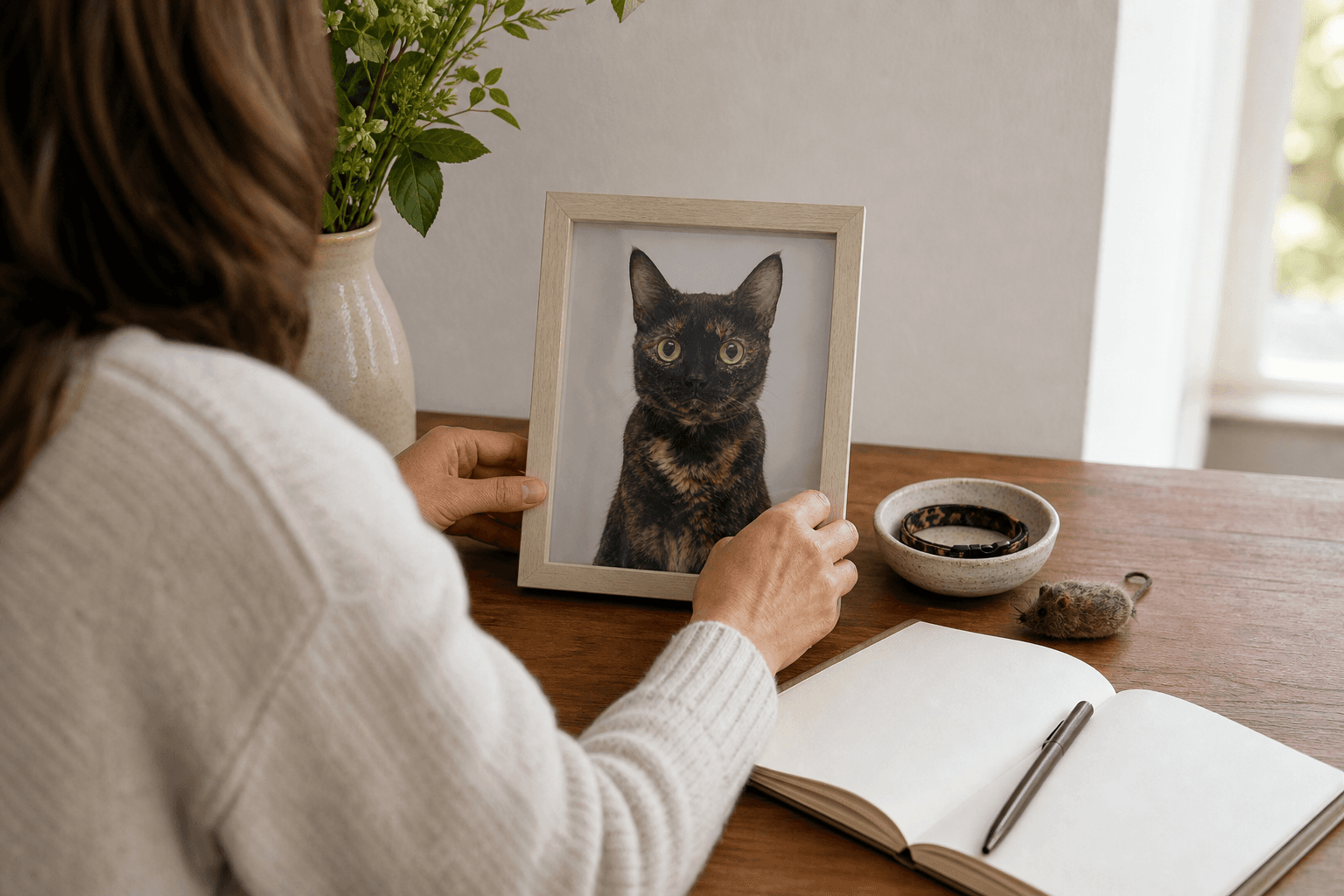
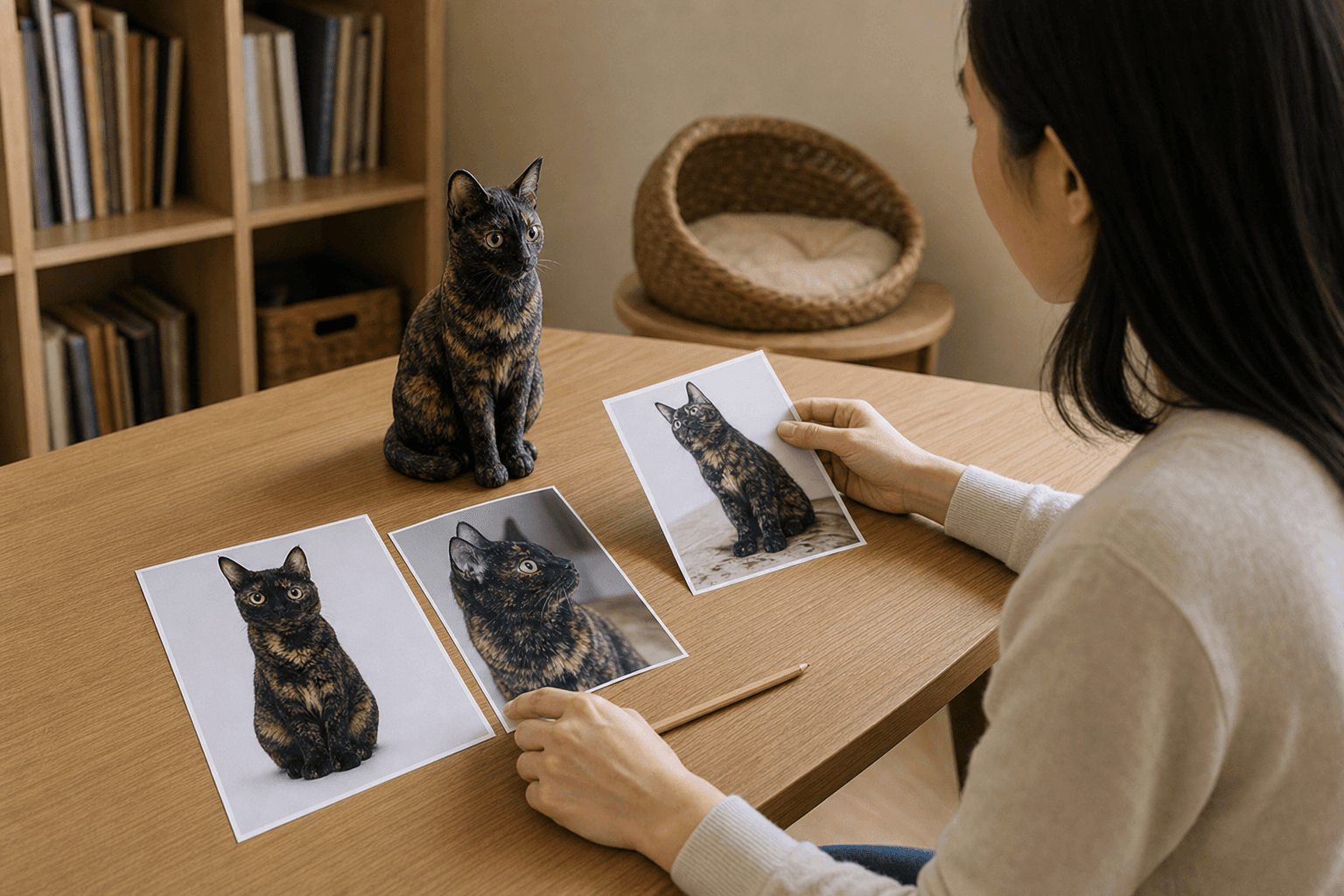
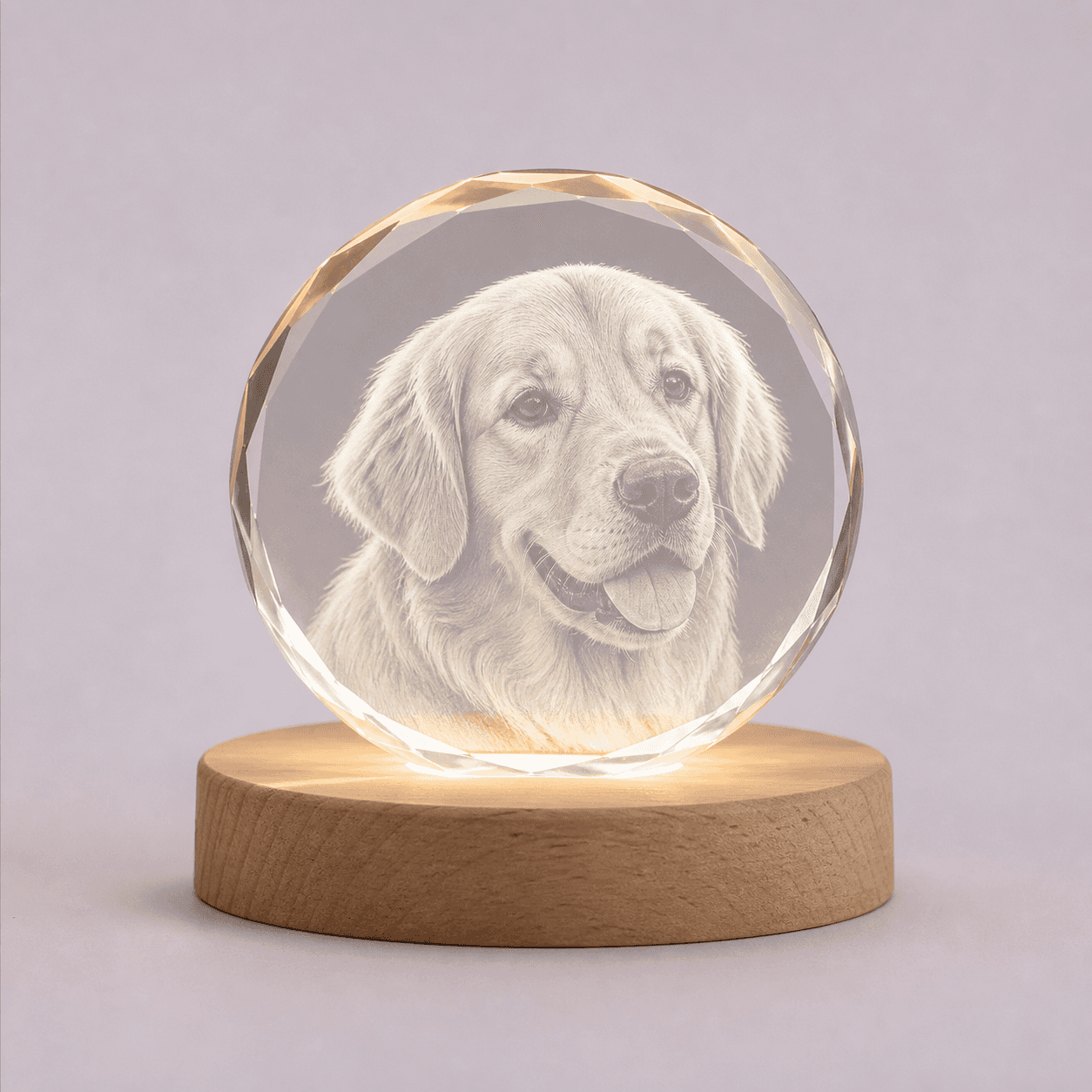
Personalization can be minimal. A name, a nickname, a date, or a phrase tied to your everyday life together can feel closer to the heart than a long text. If you want to use a photo, pick one that feels familiar to you, not necessarily the sharpest or most formal shot. The look in their eyes, the tilt of their ears, or the markings on their muzzle often capture them better than the background does.
You can also skip words entirely and keep just a color, a silhouette, or a symbol. Every family experiences grief differently; if the urn will sit in the living room, a simple design blends more easily into daily life. In a more private space, you can go with something more intimate.
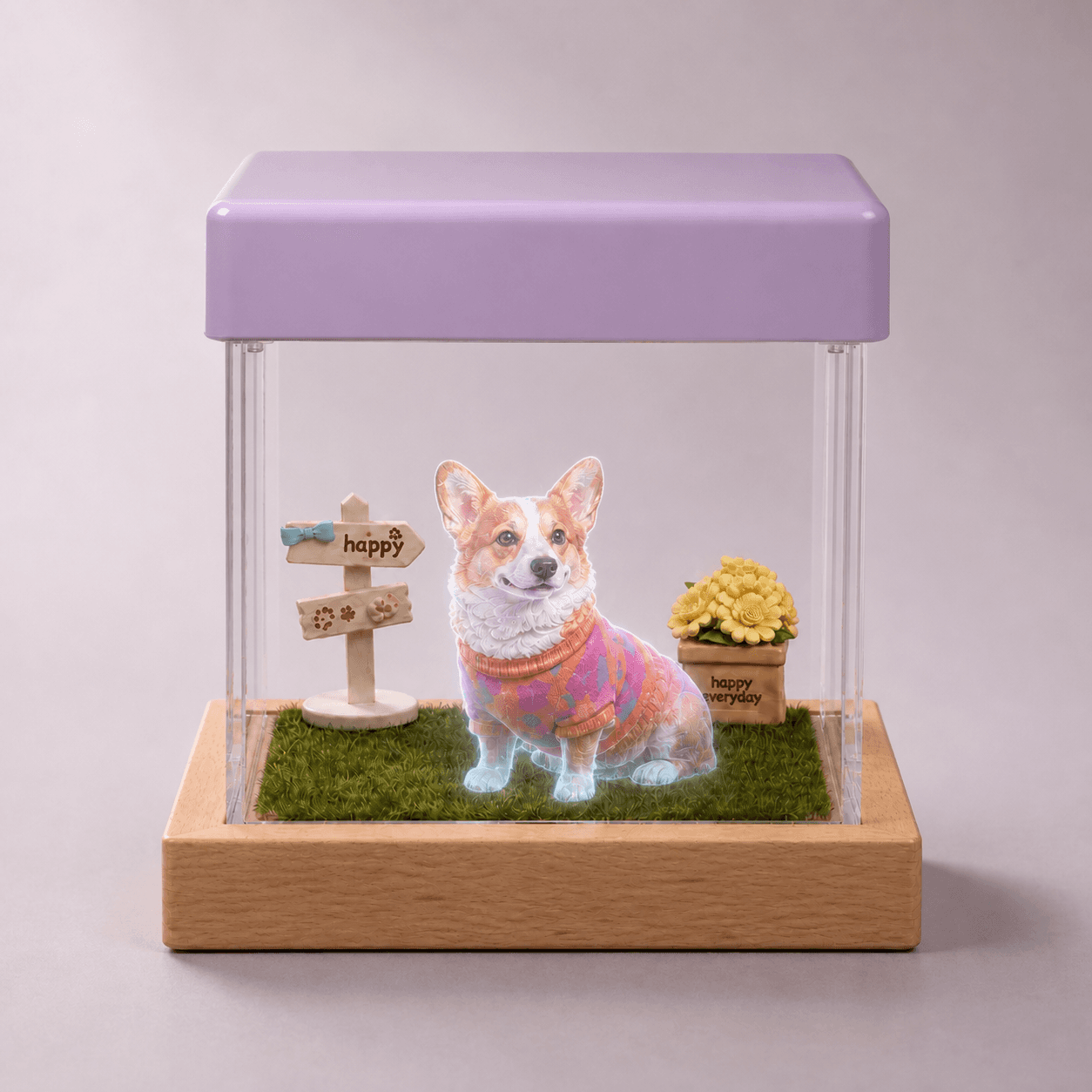
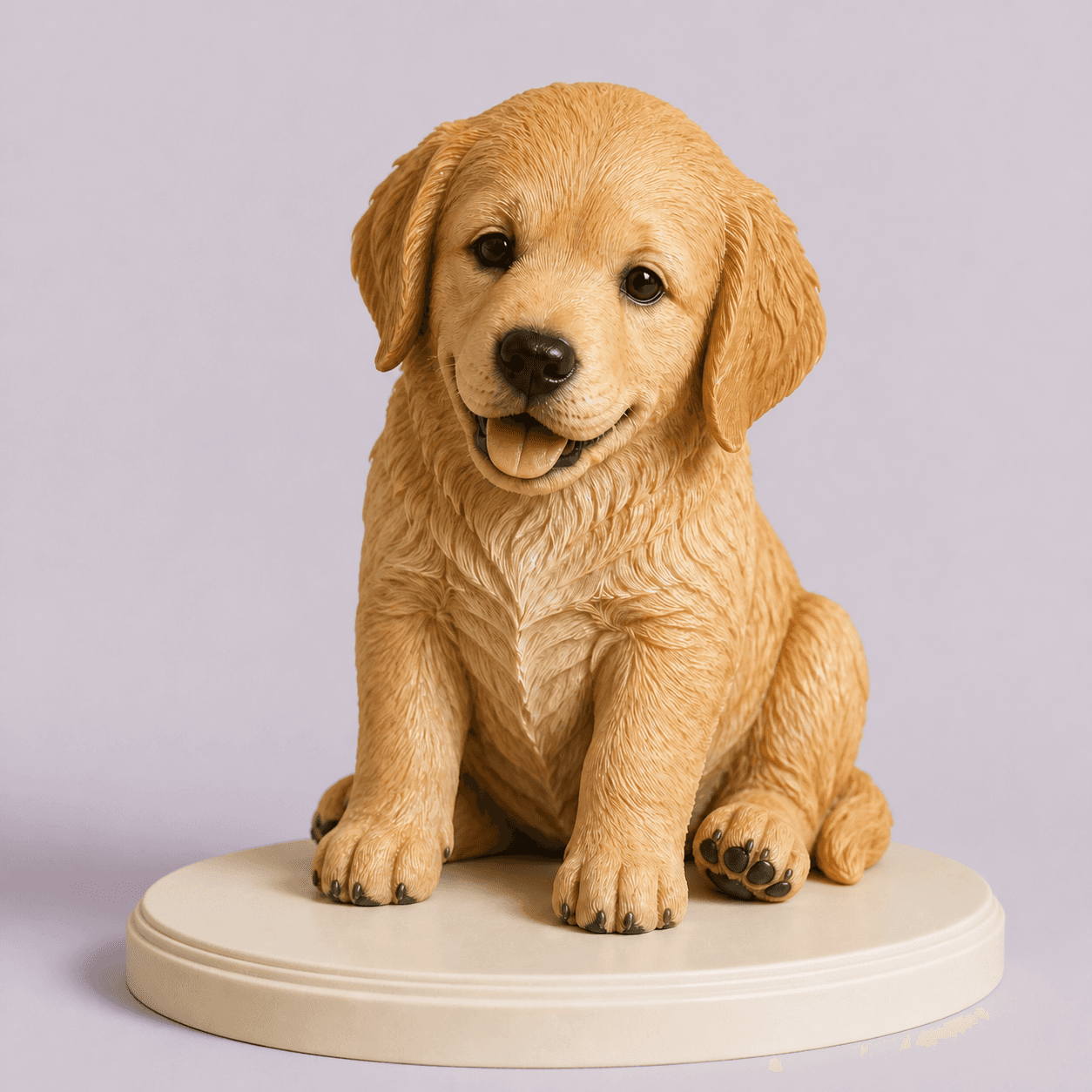
As you compare different forms of personalized remembrance, you can browse ideas for remembering a pet from PawParting and weigh the urn, photos, words, and other keepsakes separately, without asking one single item to hold everything.
Where should it go in your home?
The right spot isn't necessarily the most visible one: it's the place you're comfortable having it, one you can live with peacefully. A bookshelf, a windowsill, a bedroom dresser, next to a plant, or in a corner set aside for photos are all valid options. Avoid places where it could fall, pick up moisture, get too much direct light, or get bumped often. If you have small children or other pets at home, think about safety and stability too.
You can use an empty box or a sheet of paper to mark out the approximate footprint and try out different spots for a few days, noticing how you feel as you pass by. If a place leaves you constantly tidying around it, or deliberately avoiding it, don't force yourself to choose it. Some people place the urn near the photo album, the collar, or favorite toys, tying different memories together; others prefer to keep it on its own, with a quieter distance around it. Either choice can change over time.
If you'd like to turn this corner into a fuller memorial space, you can find inspiration in memorial pieces that fit naturally with your home, without adding things you don't truly feel you need.
A path without hurry
Start by writing down two or three details you want to preserve above all else. Then measure your chosen spot and note the height, color, and type of container you prefer. Compare just two or three models, and for each one, jot down which features remind you of your pet and which make you uneasy. Reread any inscription on its own, making sure it's a phrase you'd genuinely want to keep seeing. If you're still unsure, hold on to your notes and photos for now and put off the decision.
A memorial piece doesn't have to be settled all at once. Down the road, you might want to change its location, add a photo, or keep the urn separate from other keepsakes, and that doesn't make your earlier choice any less meaningful. Life brings new details into our memories, and the way we care for them can stay open to change too.
Frequently asked questions
Does the urn have to go in the most visible spot in the house?
No. Choose a safe, dry place where you feel free to walk past or pause for a moment. If you'd rather not have it in plain sight for now, you can keep it in a private, secure space.
Can I personalize it even without a good photo?
Absolutely. Consider the name, a nickname, a color, a paw print, or a short phrase. The value of personalization doesn't depend on a portrait alone: even a familiar detail from daily life can tell the story of your bond.
Would switching urns later feel disrespectful?
Changing how you keep your pet's ashes can simply reflect the needs of your life now, it doesn't erase what you shared. Before transferring them, prepare a new, clean, stable container, and proceed in whatever way feels right to you and your family.
If grief makes daily life difficult for a long stretch of time, or you worry you can't carry it on your own, consider reaching out to a professional or a support service in your area.
Read gently, and take what helps.