TL;DR
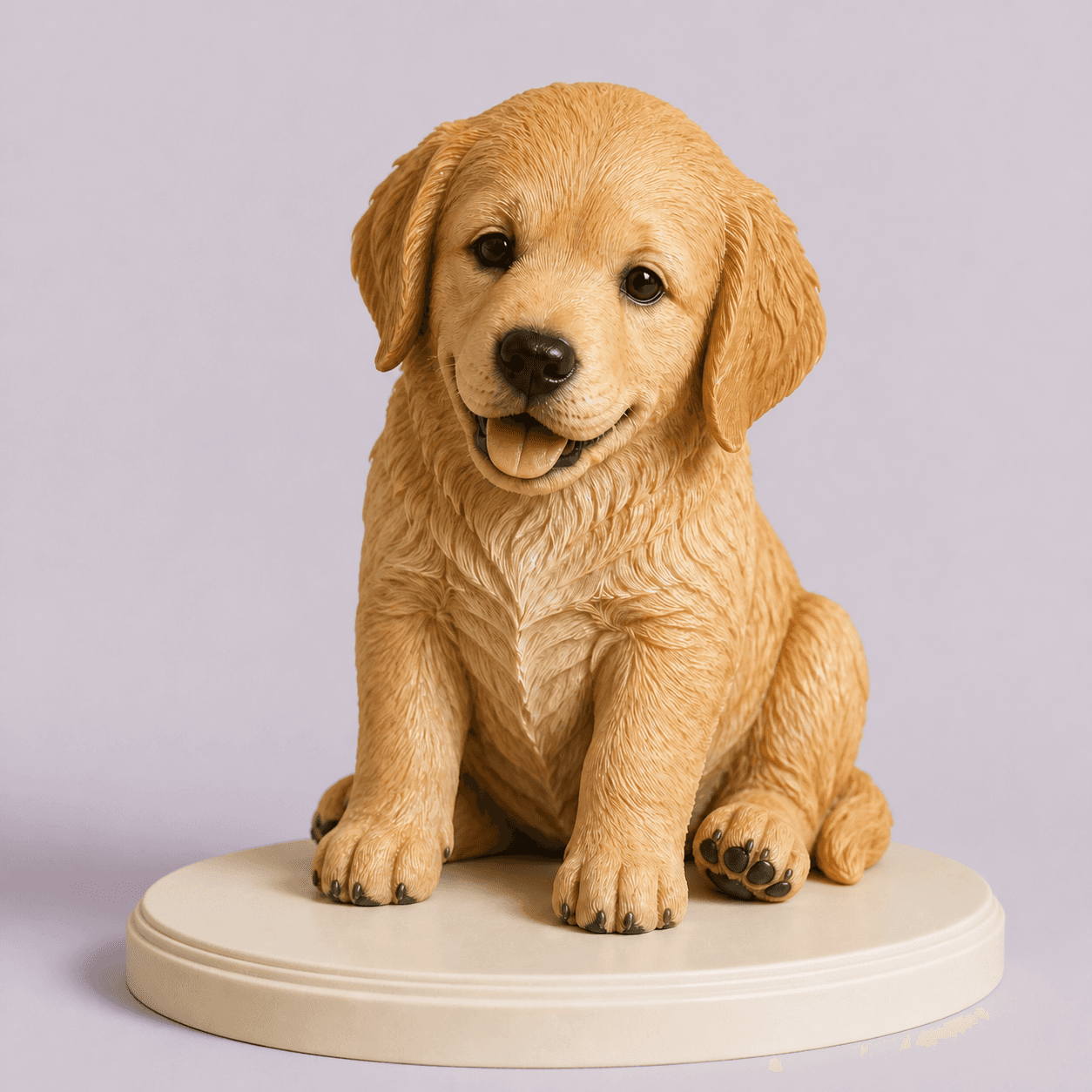
Choosing a custom pet figurine comes down to picking reference photos that clearly show your pet's proportions, coat colors, and expression, then deciding in advance which one feature must be accurate and which one or two details you'd most like preserved.
Look Through Your Photos Before Ordering
When preparing to commission a custom pet figurine, the hardest part is often identifying the photo that best matches how you remember them—not simply choosing the prettiest one.
To preserve both appearance and personality, first identify the features that matter most. Then choose photos that clearly show body proportions, coat colors, and expression, and ask the maker what can be adjusted. A few accurate, familiar details usually make the figurine more recognizable than adding lots of decorations.
Decide What You Most Want to Preserve
The same pet may look different in different people's memories: ears tilted slightly to one side, a body that leaned to one side while sitting, or an especially focused look when waiting for a treat.
Before ordering, sort your priorities into three categories:
- Appearance: Coat color patterns, marking placement, ear shape, tail length, or nose color.
- Familiar poses: Lying down, sitting upright, lifting a paw, looking back, or another common little habit.
- Meaningful details: A collar, name tag, favorite blanket, or toy tied to a specific memory.
Choose one detail that “must be accurate” and two that you would “like to preserve as much as possible.” This makes it easier to decide what to prioritize when photos are limited or production constraints arise.
Choose Reference Photos for the Custom Pet Figurine
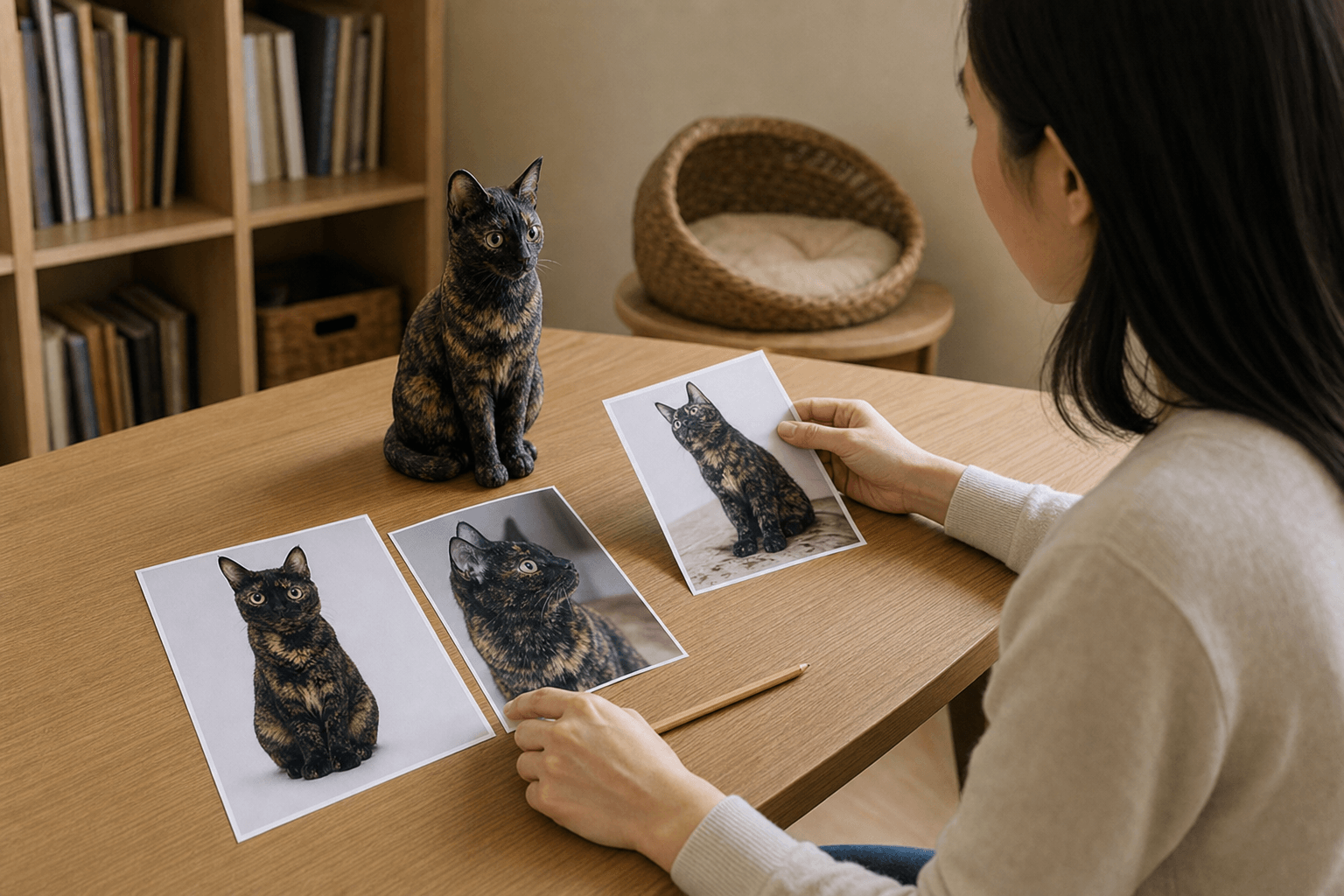
A single front-facing photo rarely shows complete proportions. A more useful set typically includes front, side, and back views, along with a candid photo that captures a natural expression or familiar pose.
Prioritize photos with natural lighting, no filters, and clearly defined fur edges. If the photos come from different stages of your pet's life, specify which period should be the primary reference so coat color, body shape, and facial contours do not conflict.
When you have only a few photos, you do not need to force every angle into the set. Explain which features are supported by reliable references and which areas the maker may interpret from the available images. If you are still gathering memorial materials, Pet memorial articles and inspiration may also help you find more specific clues in photos, nicknames, and everyday habits.
Choose Personalized Details Instead of Overloading the Design
The available customization options vary by maker and production method. Ask separately whether the pose, expression, coat color, accessories, base, and text can be changed.
A name and date are optional. If a nickname, an old collar, or a particular sleeping position brings back a stronger sense of familiarity, you can keep only those elements. For long coats, gradient coloring, or small markings, ask in advance how they will be rendered and whether you can review a sketch, model image, or color scheme before production.
For wings, halos, or other symbolic elements, choose according to your own beliefs and memories. You do not have to follow a conventional style of memorial expression.
Compare Materials and Sizes
Material affects the visual texture, weight, level of detail, and how the figurine can be displayed later. Specific performance depends on the construction process and surface treatment, so request close-up photos of actual pieces and care instructions before deciding.
| Option | Common visual impression | Worth confirming before ordering | |---|---|---| | Resin or similar synthetic materials | Often suited to three-dimensional details and rich colors | Surface treatment, cleaning method, and suitability for sunny environments | | Clay or ceramic | More visible handmade character and a gentle texture | Whether it is fragile, the glaze effect, and how well small details can be rendered | | Wood | Natural grain, with shapes that are often more simplified | Whether the grain will affect coat colors and how the surface should be maintained | | Metal | Clear contours and a relatively streamlined look | Weight, surface color, and how details will be rendered |
Do not judge size by height alone. Confirm the base width, the total dimensions once the tail or ears extend outward, and whether the intended location can safely accommodate the piece. A small figurine works well on a bookshelf or in a corner beside the bed, though fine markings may need to be simplified. A larger piece can retain more of the outline and requires a more stable, spacious display surface.
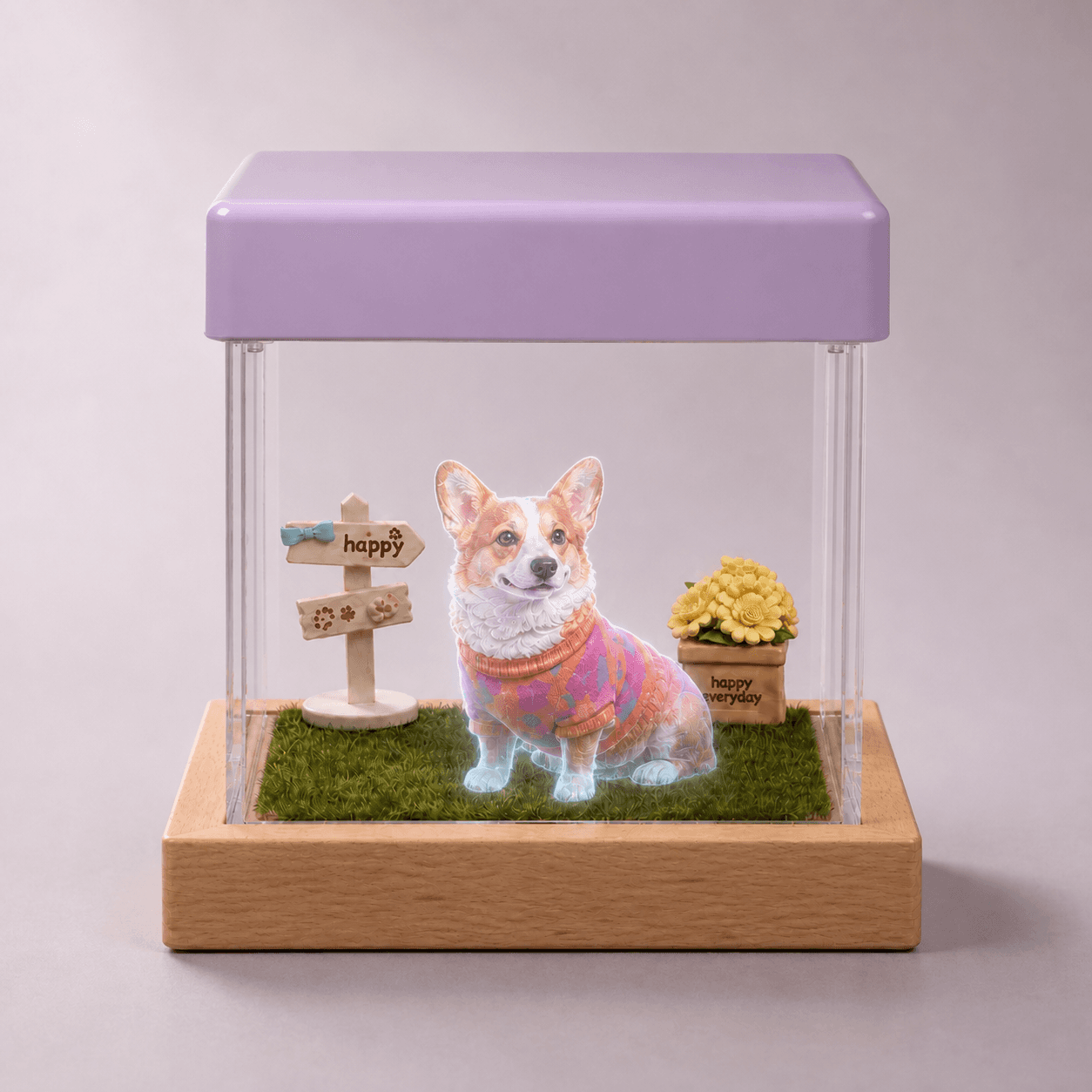
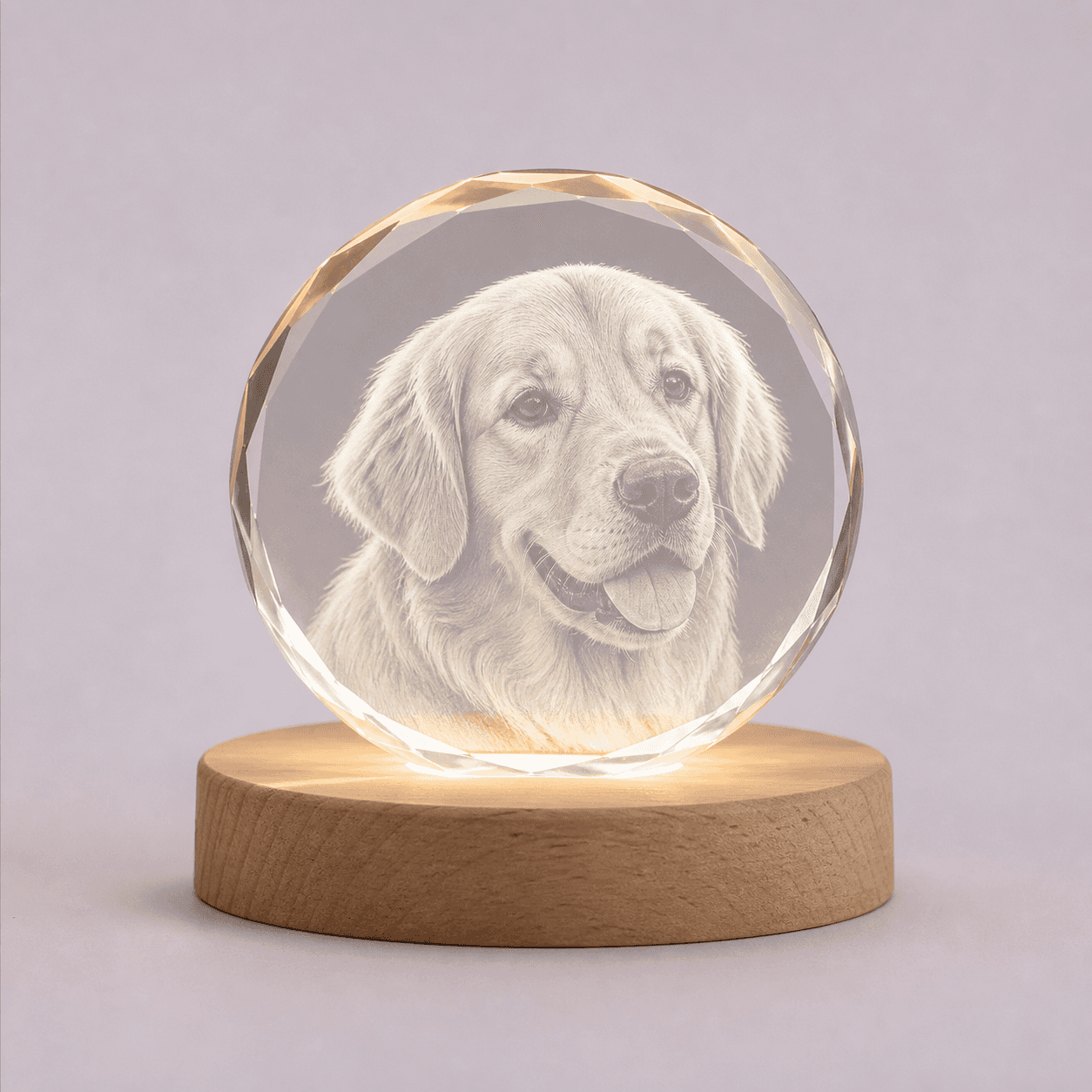
If you are still comparing figurines with other memorial formats, browse different types of pet memorials before deciding whether a three-dimensional sculpture fits the way you want to preserve the memory.
Use a One-Page Brief to Reduce Misunderstandings
Put the commission details on one page so important information does not get scattered across multiple messages:
- Your pet's name and the age stage you want represented
- One primary reference photo, clearly identified as the main source
- Additional angle photos and the purpose of each
- Appearance features that must be accurate
- The pose or expression you want to preserve
- Optional details such as a collar, name tag, or toy
- Elements you do not want added or that should be omitted
- The intended display location and acceptable dimensions
- The process for approving sketches, colors, or the finished piece
- The revision policy, production time, shipping packaging, and process for handling damage
If lighting affects the coat color in a photo, describe the true color directly—for example, that it is darker, lighter, or warmer—rather than relying on how it appears on a screen. When reviewing the proof, check the outline, marking placement, and pose first, then move on to decorative details.
Give the Figurine a Quiet, Secure Place
You do not need to create a dedicated memorial corner. The figurine can sit on a bookshelf, beside a photo, or in a room where your pet used to spend time, as long as the location feels natural to you.
Consider whether the surface is level, whether the figurine could easily be knocked over, and whether the light, humidity, and dust levels align with the maker's care recommendations. If you have other pets or young children at home, a high, secure location is more suitable.
If you wish, place a short note beside it with a nickname, a familiar habit, or a small event from a particular day. You do not need to include the whole story; one specific moment is enough.
Frequently Asked Questions
Can I still order a custom figurine with only a few old photos?
Start by sending the available photos to the maker for an assessment, and clearly mark the angles that cannot be confirmed. When references are limited, a simpler pose and more generalized details are usually a safer choice than asking the maker to infer the complete appearance.
Should I choose a realistic or slightly stylized design?
If markings, proportions, and facial features matter most, a realistic approach may be the better fit. If you primarily want to preserve a certain expression or gentle impression, a stylized design may work well. When reviewing the maker's past work, pay attention to how they handle fur, ear shapes, and body types similar to your pet's.
Can features from different photos be combined?
Ask whether the maker accepts combined references, and specify whether each photo is being used for the pose, coat color, or expression. Avoid combining conflicting features from different stages of your pet's life.
How should I clean the figurine after it arrives?
Care requirements vary by material and surface treatment. Keep the care instructions provided by the maker. When no clear instructions are available, avoid applying cleaning products or rubbing delicate areas forcefully.
Read gently, and take what helps.