TL;DR
When a pet dies, pet loss support groups offer a space to sit with people who understand that bond, whether online or in person, through sharing, reading messages, or simply listening quietly. There is no single right format, and you can observe first, ask questions about rules and facilitation, and participate only as much as you choose.
What Pet Loss Support Groups May Look Like
Some groups communicate through written posts, some use audio or video, and others meet at a set location. Activities may include taking turns sharing, open conversation, quiet listening, or sharing photos and written remembrances. Specific arrangements will depend on the group’s published information.
You Can Observe First When Attending for the First Time
When entering a new space, you can begin by noticing how members respond to one another. A community where people feel respected will generally allow different forms of expression: some people may want to say a great deal, some may write only their pet’s name, and others may remain silent.
If the group has a facilitator, consider whether that person explains the boundaries for communication, such as whether discussions are confidential, whether members can pause at any time, whether cameras may be turned off, and how inappropriate comments are handled. If this information is not provided, you can ask before participating.
You can also prepare a simple introduction in advance: “I’d like to just listen today.” That is enough. Whether you share, and how much you share, is entirely up to you.
Different Options for Online and In-Person Spaces
Online groups may suit people who want to participate from a familiar environment. Written communication can provide time to organize your thoughts, while live gatherings may feel more like an in-person conversation. However, online spaces can also involve too much information, replies that move too quickly, or unclear boundaries. Before participating, you can review the moderation rules and consider what information you are willing to share publicly.
In-person groups offer the feeling of sitting together in the same space, but they may also require travel arrangements and involve the uncertainty of meeting people for the first time. If you are still hesitant, you can ask about the meeting format, whether the number of participants is consistent, and whether you may attend only to listen. For anything you cannot confirm in advance, it is reasonable to reserve judgment.
Choosing online or in-person support does not have to be a long-term decision. You can try it once and then decide whether to continue based on how you feel, or you can step away for a while.
How to Recognize a Respectful Community
You can begin by observing a few specific details: whether members listen attentively, respect different family relationships and ways of remembering, avoid comparing whose loss is more painful, and accept different cultures and beliefs.
A community does not need everyone to think alike, but it should have room for differences. If someone pressures you to move on, judges your decisions, forces a particular explanation on you, or uses a vulnerable moment to sell services, you can end the conversation or leave. Leaving a group that is not right for you does not invalidate your search for companionship.
You can also ask yourself: After participating, can I still move at my own pace? Can I say, “I don’t want to answer”? Does this space allow my pet to be remembered as real and specific, rather than reduced to a loss? There is no universal standard for these feelings, but they can help you make a choice that more closely reflects your needs.
Bringing Specific Memories Into the Conversation
If you do not know where to begin, you can start with a very small detail. It might be the familiar sound of your pet waiting by the door, the place where the food bowl sat, a nickname only your family understood, or an ordinary afternoon captured in a photograph.
Sharing these details with a group is not about telling the whole story. Saying only, “They always loved sleeping by the window,” can help that shared life be seen. If you do not want to share it publicly, you can write the sentence on paper and keep it for yourself.
Ways to Remember Your Pet Alongside Peer Support
A remembrance does not have to be grand. You can choose a photograph and write the weather and the story of that moment on the back; create a handwritten page about a nickname; record something you often said in a private notebook; or ask family members to each write down one familiar little habit.
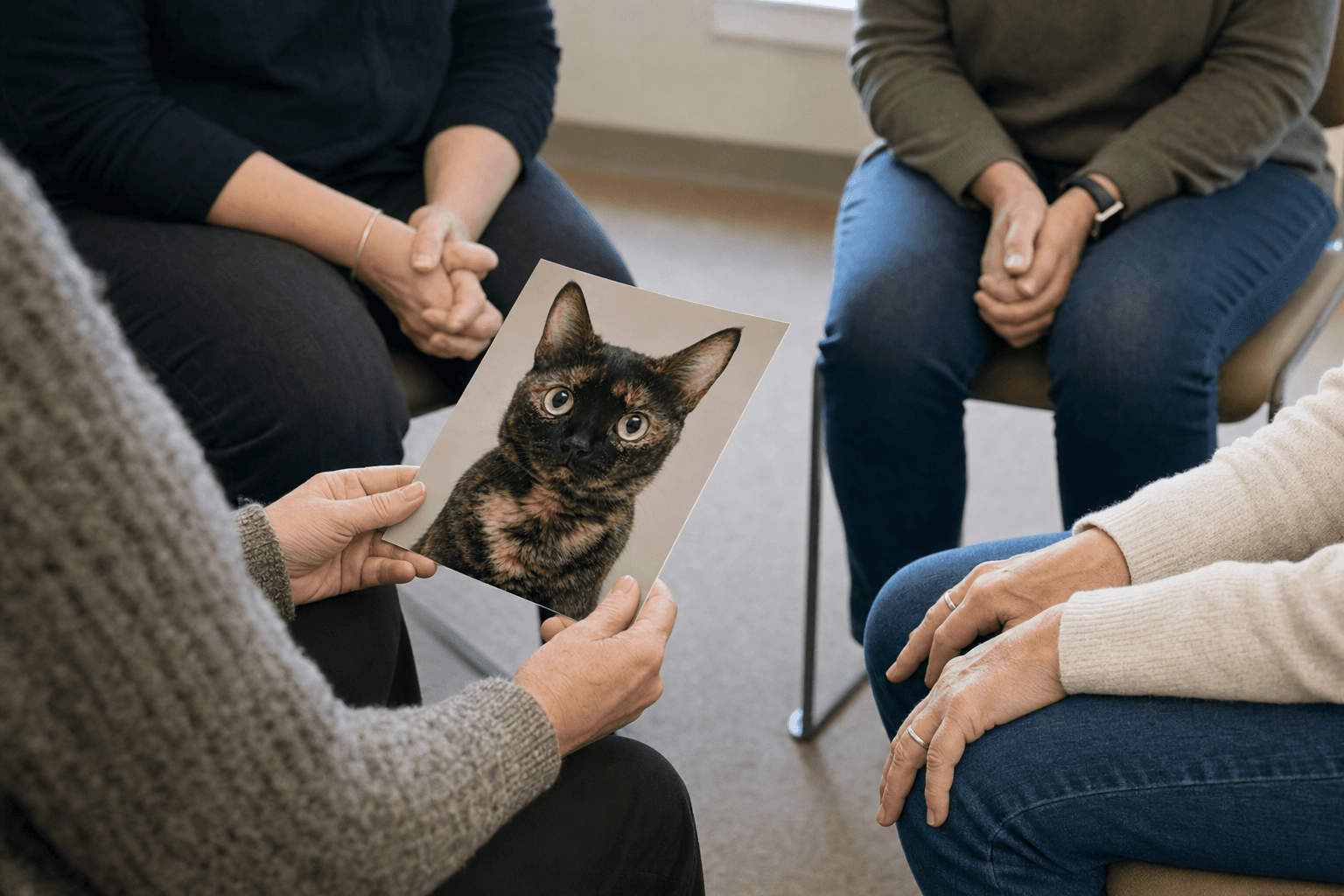
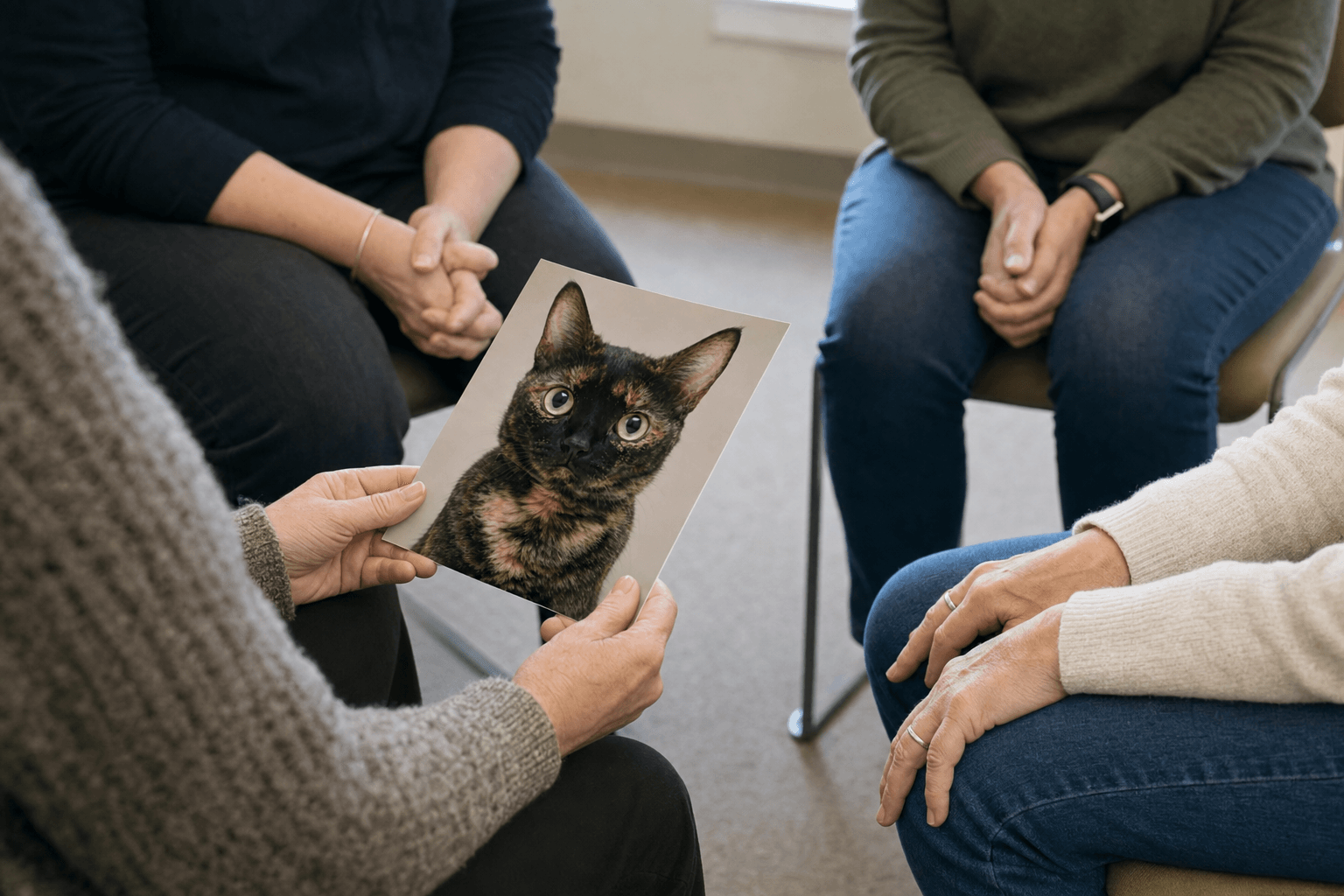
If the group allows it, you can also bring a photograph and introduce your pet when you feel ready. Another option is to prepare one memory for each gathering, without requiring it to follow chronological order or expecting yourself to organize every experience clearly.
Remembrance and conversation can accompany each other, or they can remain entirely separate. Sometimes you may want to talk, while at other times you may want only to keep a small object. Sometimes an approach feels right and is no longer needed after a while. The change itself does not require an explanation.
Leaving Some Room in How You Participate
The first time you look for pet loss support groups, you may not immediately find the right place. Group size, tone of communication, and meeting format can all affect the experience, and a public description may not show the full picture. Observing first, asking questions, and participating briefly are all valid options.
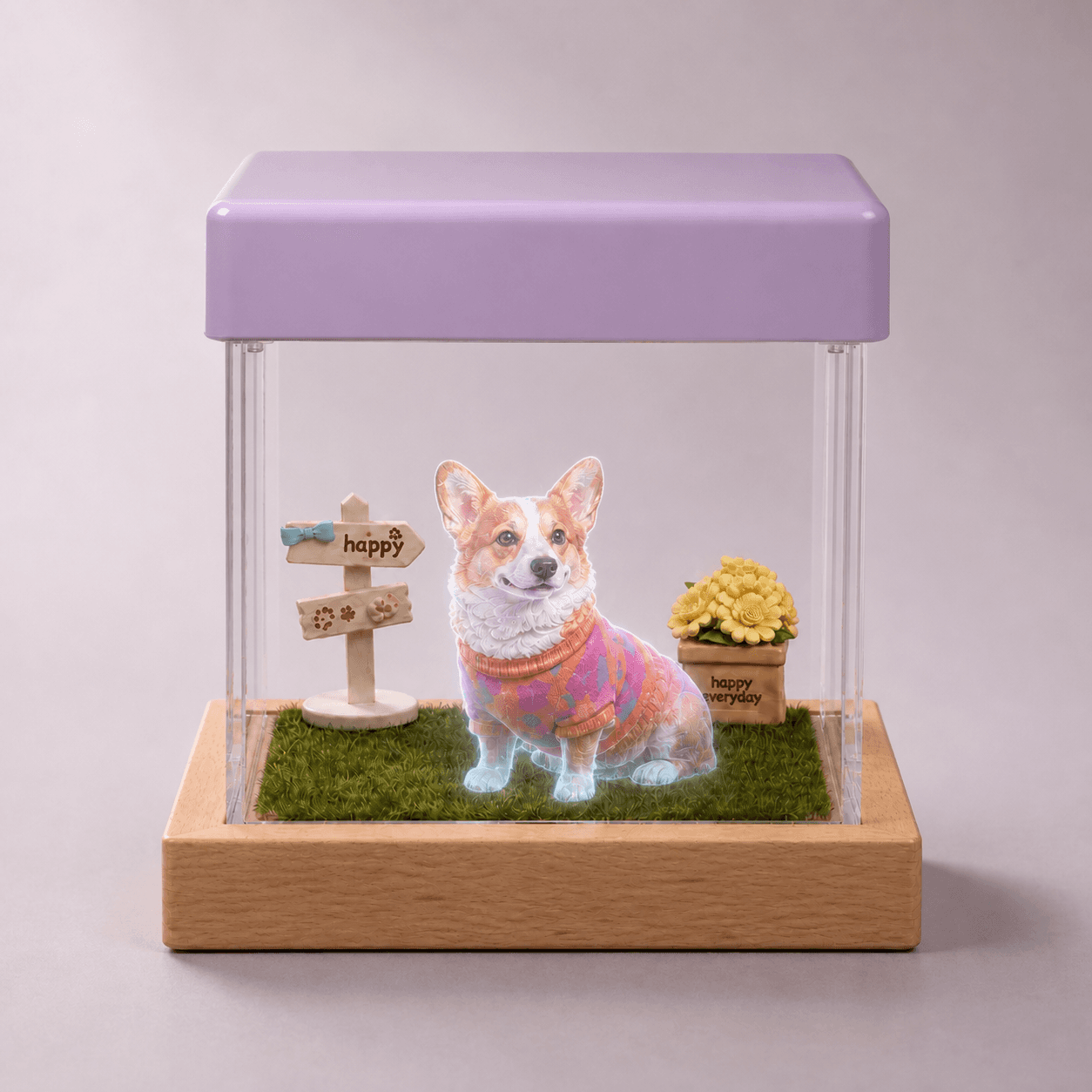
A remembrance can be simple: a photograph, a handwritten message, or the story behind a nickname. It is not meant to make your longing smaller, but to leave a place where the specific days you shared in love can come to rest.
Continue reading: A Gentle Guide to Finding and Joining Pet Loss Support Groups
Read gently, and take what helps.