TL;DR
The best poem about losing a dog is the one that matches the moment: a brief, steady piece may suit a sudden loss, while a poem that names shared time and gradual change may feel truer after a long decline. Below are original poems you can read at a funeral, write in a card, or keep for yourself, along with a simple way to choose.
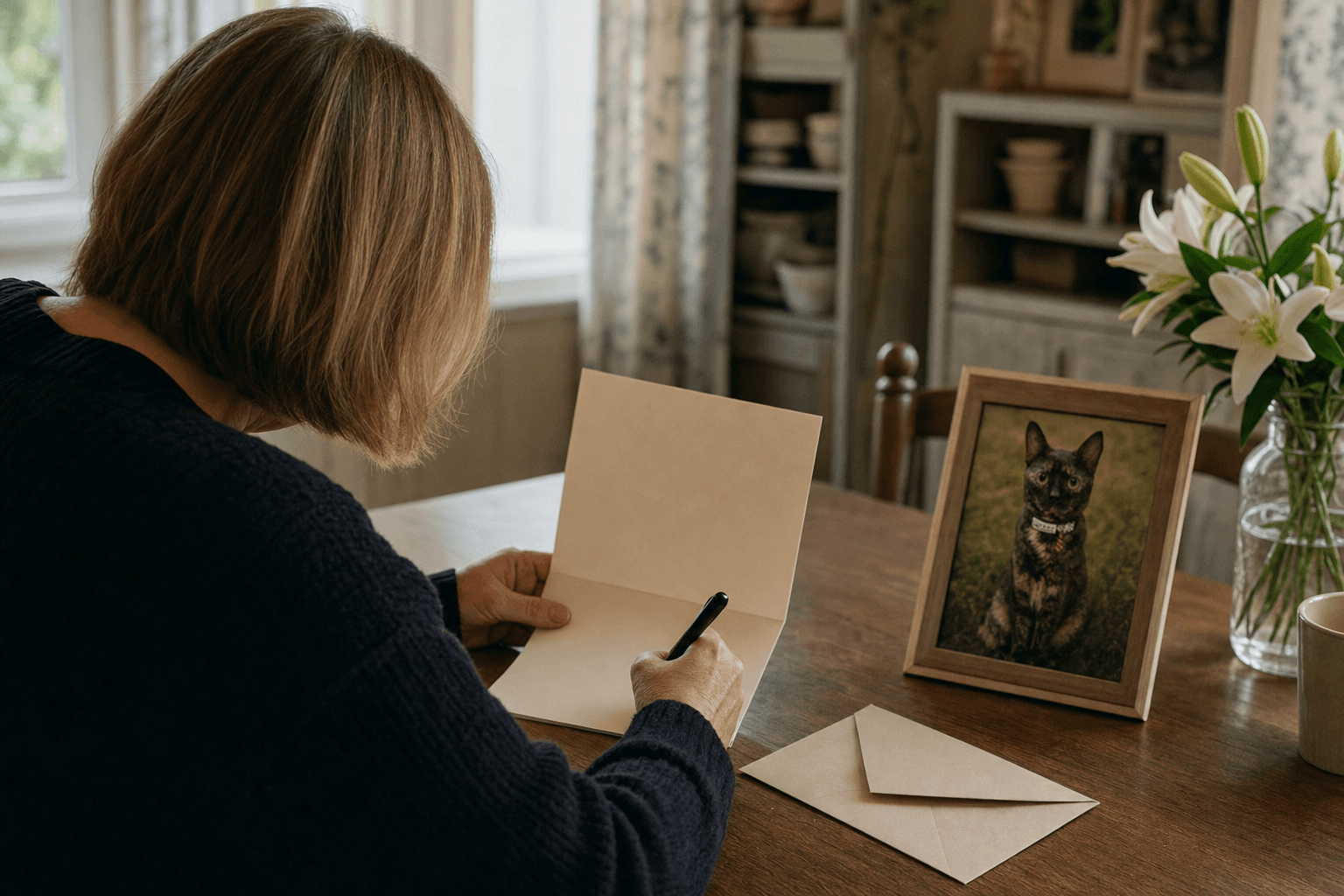
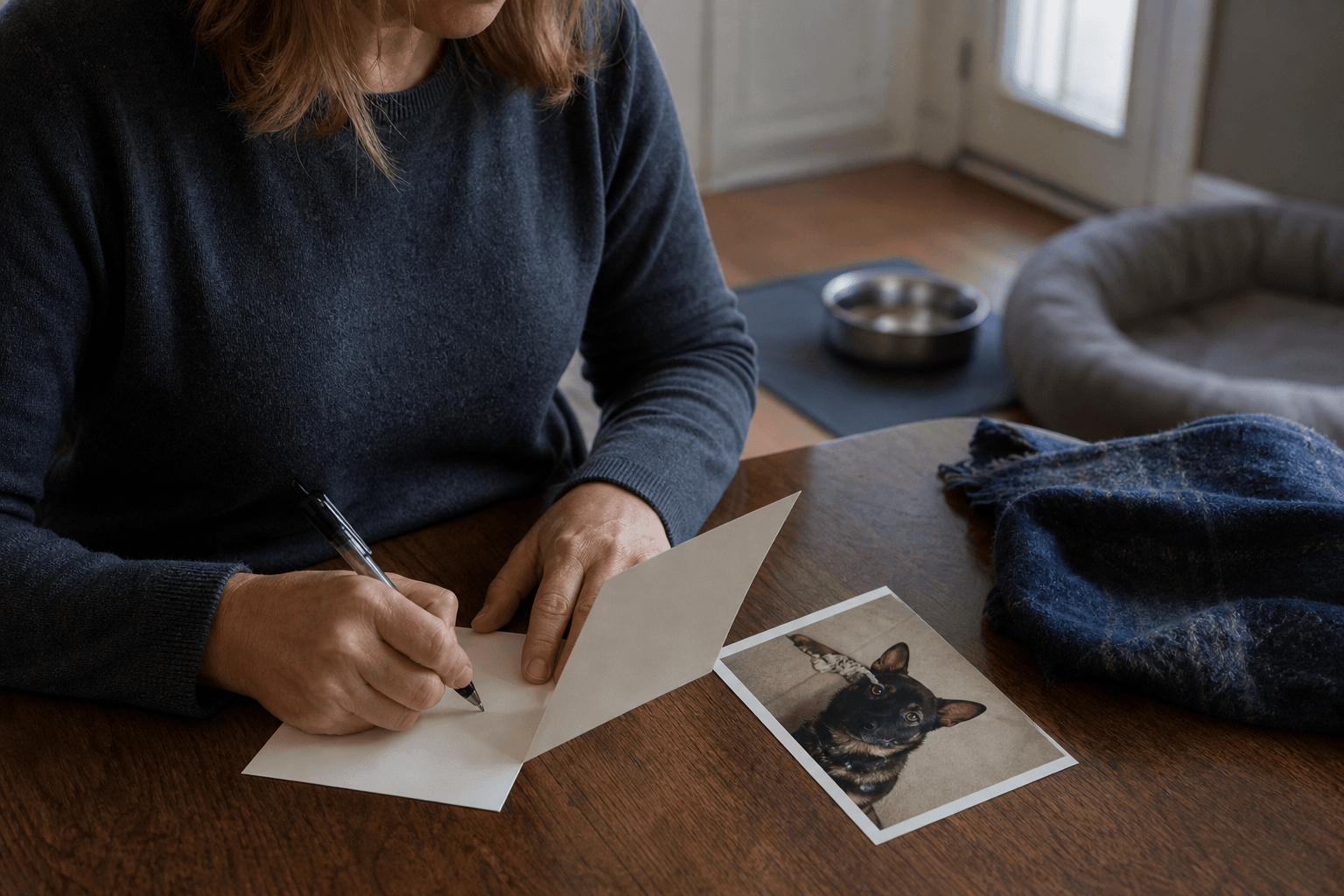
You may have a card open on the table, a few people waiting to say goodbye, or one photograph that seems to contain an entire life. In that moment, you do not need perfect words. A short poem can hold one clear memory, a name, or the shape of an absence without trying to explain it.
Which poem about losing a dog fits the moment?
Start with three questions:
- Was the loss sudden, or did you have time to prepare?
- Will the poem be read aloud, written in a card, or kept privately?
- Would specific details feel comforting, or too exposed right now?
For a funeral or gathering, choose something that can be spoken slowly in under a minute. For a card, a few lines with one personal detail may feel more natural. For private reading, you can choose a longer poem, repeat a favorite line, or write in fragments instead of trying to create a polished verse.
A useful decision guide:
| Situation | A fitting approach | Details to include | |---|---|---| | Sudden loss | Keep the language simple and present | Their name, a familiar place, one steady quality | | Long decline | Acknowledge time, care, and change | Routines, small acts of care, a peaceful goodbye | | Funeral or memorial | Use a clear rhythm and a gentle ending | What they gave, what will be remembered | | Sympathy card | Keep it brief and personal | Their name, a specific memory, a warm wish | | Private reading | Let the form be unfinished if needed | Questions, repetition, ordinary details |
For more short wording that can accompany a poem, see messages for losing a dog.
A short poem for a sudden loss
When a dog dies without warning, lines that do not ask you to find meaning may be easier to read. This original poem stays close to the shock of an ordinary day that has changed.
The Empty Place
The bowl is still, The doorway stays, Your name moves softly Through our days.
No time to say All love can say, So we will speak it Anyway.
You can replace “your name” with your dog’s name when reading this aloud. If that feels too difficult, leave the poem unchanged. A poem does not need every detail to belong to them.
A poem for a long goodbye
After an illness or a gradual decline, grief may include exhaustion, relief, tenderness, and the memory of many small decisions. A poem for this kind of loss can recognize the care that filled the final days without making that period the whole story.
In the Quiet Between
We learned the softer ways of love, The slower walk, the careful chair, The hand that rested close to you, The quiet asking, “Are you there?”
You gave us days in little things, A lifted head, a trusting gaze. We held the time we could not keep, And thank you for the borrowed days.
This may suit a private reading or a memorial where family members shared in care. You might change “the slower walk” to a detail that was distinctly theirs, such as waiting by the kitchen, sleeping beside a particular chair, or resting in the afternoon sun.
A four-line poem for a sympathy card
A card usually leaves less room for context. Four lines can be enough, especially when paired with a sentence that names the dog and your relationship to the person grieving.
Four Small Lines
Your pawprints remain In the places you knew. Love stays in the quiet, And keeps finding you.
You could write: “I am thinking of you and [dog’s name], especially the way they waited by the window.” A specific memory often gives a short poem a more personal place to rest. More guidance on choosing words for a condolence note is available in losing a dog condolences.
How do you write a poem for your own dog?
You do not need rhyme, a fixed number of lines, or a grand description. Try this five-part process:
1. Write their name or nickname at the top of the page. 2. List three ordinary details, such as a sound, a sleeping place, and a daily habit. 3. Name one quality that made them unmistakably themselves. 4. Write one sentence about what has changed. 5. End with something you want to remember, not something you need to resolve.
For example:
You waited by the back door. You knew the sound of my keys. You turned twice before sleeping. The house is learning your absence. I am keeping the mornings we shared.
That is already a poem. If you are writing for someone else, avoid guessing what their loss means or telling them how they should feel. Let the dog remain specific and loved. A broader collection of messages for pet loss can help when you want to combine a poem with a personal note.
Choosing a published poem or reading aloud
Some people prefer a poem they already know. Others want words written especially for this dog. Both choices can be meaningful, and neither needs to be treated as the more serious option.
If you select a published poem, check whether it is suitable for the setting and whether you have permission to reproduce it in a printed program or online post. At a funeral, reading a short passage may be enough. You can introduce it simply: “This reminded me of how much [dog’s name] loved being near us.”
Before the service or card is finished, use this quiet checklist:
- Can the poem be read comfortably in the time available?
- Does its tone fit a sudden loss, a long decline, or neither?
- Does it leave room for the dog’s actual name and character?
- Would the recipient welcome a spiritual reference, or is neutral language safer?
- Is the ending gentle without asking anyone to be done grieving?
If the poem will sit beside a photograph or another remembrance, ideas for a pet memorial that feels personal offers additional ways to keep the setting simple and specific.
FAQ about poems for dog loss
How long should a poem be at a dog’s funeral?
A short poem of a few lines is often easier to hear and read aloud, especially when several people are speaking. Choose length based on the gathering, not on how important your dog was.
Should a sympathy card include a poem?
It can, if the recipient appreciates written words. Pair it with a personal sentence and the dog’s name so the message feels directed to them rather than generic.
What if I cannot write about my dog yet?
You can use a single line, write their name, or keep a poem unread for now. A private note with three remembered details is also a valid remembrance.
Is it okay to change a poem’s wording?
Yes, for an original poem or your own writing. For a published poem, follow the author’s copyright and permissions. Personalizing a short original verse with a name or familiar detail can make it feel closer to your dog.
Read gently, and take what helps.