TL;DR
For a pet memorial garden stone intended to remain outdoors for about ten years, prioritize a dense, weather-resistant material, clear engraving with a suitable protective finish, and a location with good drainage. Before ordering, ask how the stone and lettering behave through freeze-thaw cycles, then place it where you can see it without putting it in the path of mowing, shoveling, or heavy runoff.
What material lasts best outdoors?
Material is the first decision because a stone’s appearance can change long before the words become unreadable. Granite is often a practical choice for outdoor memorials because it is dense and available in several colors and finishes. Marble can look gentle and luminous, but its surface may weather and soften over time. Slate has a natural, layered character, yet those layers make the stone more sensitive to splitting or flaking in some outdoor conditions. Concrete can be substantial, but moisture and repeated freezing may lead to surface wear or cracking.
Ask the maker these questions before choosing:
- Is this material intended for year-round outdoor use?
- How does the finish handle water, sun, and ice?
- What happens if the stone is exposed to repeated freezing and thawing?
- Is the lettering carved, blasted, engraved, painted, or applied?
- Can the inscription be refreshed if the surface changes later?
A sample photo may show the stone when new, not how its color and lettering will look after years outside. If you are comparing several options, choose the one with the clearest maintenance information rather than relying only on the initial appearance. You can browse PawParting’s store when you are ready to compare available memorial formats.
How deep should the engraving be?
The inscription should be easy to read from the distance where you expect to stand. A name and dates may be enough, especially if the stone will sit near a path. A short phrase, nickname, or familiar expression can make it more personal, but every extra line reduces the visual space between letters.
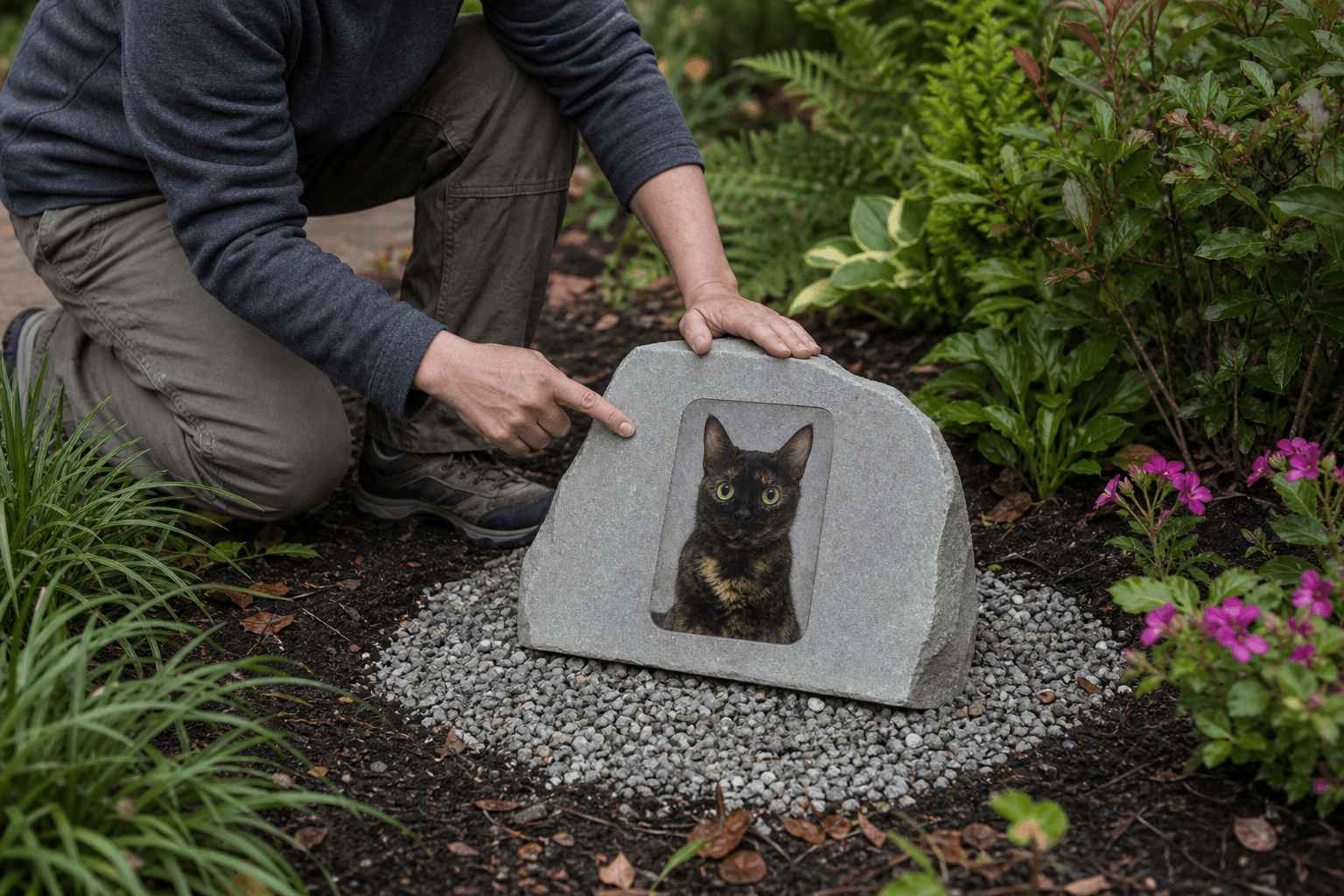
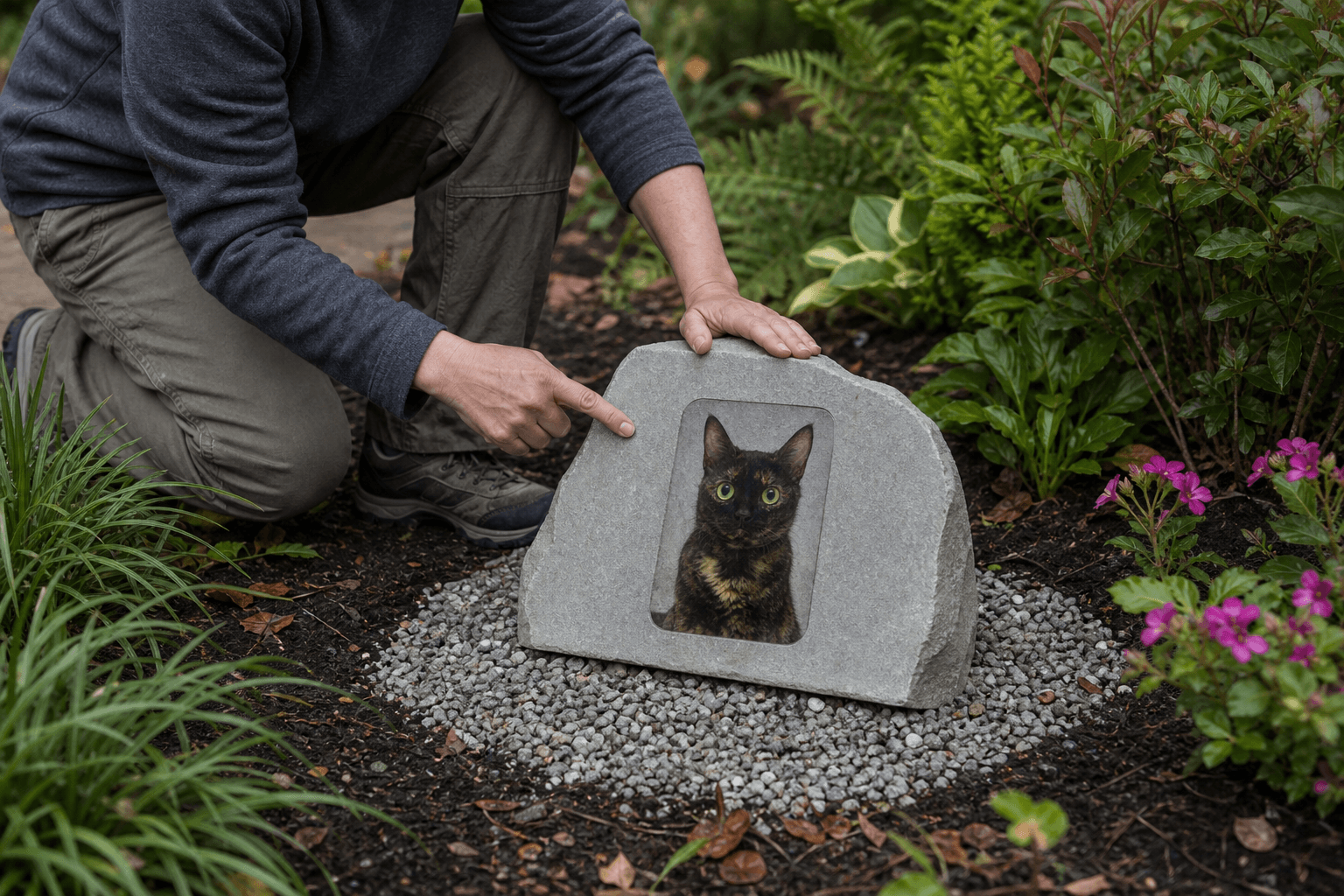
Ask whether the lettering is cut into the stone or placed on top of it. Incised or carved lettering generally gives the words a physical recess, while painted or filled lettering depends on the surface treatment remaining intact. Neither choice should be judged from a product photo alone. Request the maker’s recommended lettering size, depth, and fill for outdoor use, and ask how the contrast is maintained.
Before approving the layout, check it at actual size on a printed page. Read it from several feet away and imagine rain, leaves, and lower winter light. If the name is not immediately clear on paper, a smaller stone or shorter inscription may serve the memory better.
Will frost damage the stone or lettering?
Frost becomes a placement and drainage issue as much as a material issue. Water that enters a porous surface, a crack, or an unsealed joint can expand when it freezes. A stone that shifts in saturated soil may tilt, rock, or become partly buried during repeated seasonal changes.
Ask about the stone’s frost suitability for your climate, especially if winters bring regular freezing. Look for a stable, level base rather than placing a heavy stone directly on loose garden soil. A compacted gravel bed or another base recommended by the maker can help reduce rocking, but the correct preparation depends on the stone’s size, weight, and your ground conditions.
Do not seal a stone with a household coating simply because it is outdoors. The wrong product can trap moisture, change the finish, or make future cleaning more difficult. Follow the maker’s care instructions and test any cleaning method on an inconspicuous area first.
Where should you place a pet memorial garden stone?
Choose a place that is visible during an ordinary day, not only during a deliberate visit. A garden edge near a bench, a familiar route through the yard, or a spot beside a favorite tree may feel more natural than the most decorative corner. The right location can let the stone remain part of the landscape without making every glance an interruption.
Before setting it down, stand in the proposed spot at different times of day. Check whether it is hidden by summer growth, dazzled by direct sun, or difficult to read in shade. Also check practical hazards:
- Keep it away from mower and string-trimmer paths.
- Avoid low areas where rainwater collects.
- Leave room for plants to grow without covering the inscription.
- Consider snow clearing, roof runoff, and falling branches.
- Make sure the ground is accessible if the stone needs cleaning or repositioning.
If seeing the stone every day feels too immediate, a less central location can still be meaningful. You might place it where you can choose to visit rather than where you must pass it.
A ten-year outdoor memorial checklist
Use this list before placing an order:
1. Choose a material described for year-round outdoor conditions. 2. Confirm how the stone handles moisture and freeze-thaw exposure. 3. Select an inscription short enough to remain legible at a glance. 4. Ask whether the lettering is recessed and how its contrast is maintained. 5. Request the finished dimensions and weight, including any base. 6. Plan a level, well-drained setting away from equipment and runoff. 7. Decide whether you want a place for seasonal flowers, a small plant, or nothing additional. 8. Save the inscription, care instructions, and order details with your other remembrance notes.
A garden stone does not need to look untouched after ten years to remain a faithful memorial. Weather may become part of its appearance. The useful standard is whether the name, placement, and surrounding space still feel considered, and whether the stone remains safe and readable enough to serve the purpose you chose for it.
For more ideas about keeping a remembrance personal without making it elaborate, you can also browse PawParting’s remembrance articles.
Read gently, and take what helps.